

Attendo (formerly Petpooja Payroll) vs greytHR: Pricing
Two capable products built for different jobs: one arrives with the attendance device in the box, the other goes wider on HR. Which one fits your team?

If you’re comparing Attendo and greytHR, here’s the short answer: both handle payroll compliance well, but they solve different problems. Attendo is a complete workforce management system for every kind of business, and it bundles the attendance hardware with the software rather than leaving you to source it. greytHR focuses on HR management with modules for hiring, performance, and employee self-service.
India’s payroll services market is worth USD 1.78 billion in 2025 and is forecast to reach USD 2.74 billion by 2031, a compound annual growth rate of 7.41% (Mordor Intelligence). With 7.85 crore registered MSMEs supporting roughly 32.8 crore livelihoods (IBEF, 2026), picking the right payroll tool isn’t just an HR decision. It affects your bottom line every single month.
This guide compares both platforms across five categories: attendance hardware, compliance, pricing, support, and industry fit.
Key Takeaways
- Attendo includes free biometric hardware with lifetime warranty; greytHR requires separate purchase
- greytHR runs a 7-day free trial, so a micro business can try it before committing
- Attendo charges a flat annual fee, so the software bill does not move as headcount grows; greytHR bills a base fee plus a rate for each employee
- Choose Attendo for operations-heavy businesses; choose greytHR for IT/corporate firms needing full HR suites
Attendo vs GreytHR: Quick Comparison Table
| Feature | Attendo | greytHR |
|---|---|---|
| Best for | Indian businesses of any size that want a price-effective way to run attendance and payroll | IT companies, corporate offices, HR-focused organisations |
| Biometric hardware included | Yes (free, lifetime warranty) | No (buy separately) |
| Face recognition attendance | Built into the included device | Yes, via greytHR Visage |
| Geo-tagged mobile attendance | Yes | Growth plan onwards |
| PF/ESIC/TDS compliance | Yes | Yes |
| WhatsApp attendance alerts | Daily summary to the owner | Not listed |
| Salary advance with auto-deduction | Yes | No |
| 24×7×365 support | Yes | Standard business hours |
| Free trial | Demo on request | 7-day trial |
| Pricing model | Fixed annual | Per-employee monthly |
| Businesses served | 40,000+ | 34,000+ |
Which Offers Better Attendance and Biometric Hardware?
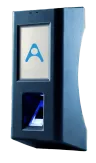
Attendo wins this category outright. It’s the only platform of the two that ships biometric hardware to your doorstep, free of cost, with a lifetime warranty.
The device supports both fingerprint scanning and face recognition. Employees clock in, and attendance data flows directly into the payroll calculation. No manual entry. No buddy punching. Geo-tagged mobile attendance is also included for field staff and remote workers.
Why it matters: when punches come off a device rather than a register, the attendance feeding payroll is the attendance that actually happened, which is where most month-end disputes start.
greytHR doesn’t include any hardware. You’ll need to buy a biometric device separately, set it up, and then integrate it with greytHR’s software. greytHR offers face recognition through its Visage module, so the capability is there; what you supply is the device and the setup around it.
Indian businesses are steadily moving from registers towards automated attendance, and the reason is usually the same: the numbers feeding payroll have to be the ones that actually happened. Attendo gives you the full stack. greytHR gives you the software and asks you to sort out the hardware yourself.
Want to see how biometric systems work in manufacturing payroll? We’ve covered that in detail.
Verdict: Attendo wins on attendance and hardware.
How Do They Handle PF, ESIC, and TDS Compliance?
Getting statutory deductions wrong is expensive. On provident fund arrears the employer owes damages of 1% of the amount for every month it is late, which is 12% a year under the EPFO notification of 14 June 2024, and interest of a further 12% a year under Section 7Q on top of that.
Both Attendo and greytHR handle PF, ESIC, and TDS calculations. That’s table stakes for any payroll software in India today. The real question is how smoothly they do it.
With 72% of MSME transactions now digital (IBEF, 2026), most small businesses can’t afford to run payroll manually anymore. One missed PF deposit or a wrong TDS deduction can snowball into penalties that eat into your margins for months.
Attendo auto-calculates PF, ESIC, and TDS based on the latest slabs and generates compliant salary slips. It handles salary advances with auto-deductions, so advances don’t slip through the cracks during payroll runs. The flexible shift module also ensures that overtime and shift allowances are factored into compliance calculations automatically.
greytHR does the same statutory calculations and adds a compliance dashboard that tracks filing deadlines. Managers get alerts before due dates, which helps prevent last-minute scrambles. greytHR also offers an employee self-service portal where staff can download their own payslips, submit investment declarations for tax saving, and view their PF balance without contacting HR.
Where they differ is in what sits around the compliance engine. Attendo connects attendance data directly to payroll, so the numbers flowing into PF and ESIC calculations are always accurate. greytHR relies on you feeding in correct attendance data from whatever system you use, unless you’ve integrated a third-party biometric device.
For a deeper look at payroll calculations, check out our guide on how to calculate payroll for small businesses.
Verdict: Tie. Both platforms handle Indian compliance well. Attendo wins on salary advance management; greytHR’s self-service portal covers more ground, though Attendo’s Employee App runs in 11 Indian languages.
Attendo vs GreytHR: Pricing Breakdown
Attendo charges one flat annual fee, so the software line stays where it is however many people you hire. greytHR bills a base fee plus a rate for each employee, which is the model most of the category uses.
Attendo takes a completely different approach: fixed annual pricing with no per-employee charges. Whether you have 50 or 500 employees, the cost stays the same. As your team grows, your per-employee cost keeps dropping.
greytHR charges a base fee plus a per-employee rate. Their Essential plan starts at ₹2,495/month for up to 50 employees, with ₹45 for each additional employee, and the Growth plan at ₹4,495/month with ₹85 per additional head. Rates change, so check greytHR’s own pricing page for the current numbers. They offer a 7-day free trial rather than a free tier, so the cost starts from the first month.
Don’t forget the hidden costs. With Attendo the device is included and carries a lifetime warranty; with greytHR the biometric hardware is a separate expense you source and set up yourself.
Verdict: Attendo wins on pricing for growing businesses, because the fee does not move as you hire. greytHR’s entry price is lower for a very small team.
Which Has Better Support and Usability?
Ever called a software helpline at 11 PM on a salary processing night, only to hear “our office hours are 9 to 6”? That’s a real problem for businesses running late shifts or processing payroll after hours.
Attendo offers 24×7×365 support. Whether it’s a salary processing issue at midnight or an attendance query on a Sunday, someone picks up. It can also push a daily attendance summary to the owner’s WhatsApp, so a manager can see who is in without opening the dashboard. Both the admin and employee get dedicated mobile apps for attendance, leave requests, and payslip access.
greytHR provides support during standard business hours. If you’re running payroll after 6 PM (which, let’s be honest, most HR managers do), you’ll be relying on their knowledge base and chatbot.
Both products let staff serve themselves, in different ways. Attendo’s Employee App shows attendance, leave balances and payslips, takes leave applications, and runs in 11 Indian languages, which matters when the workforce is not desk-based. greytHR’s ESS portal is polished and goes wider, covering tax declarations, reimbursement claims and document uploads.
For businesses with multiple outlets or shifts, the WhatsApp alert is surprisingly useful. Managers get a daily attendance summary without logging into any dashboard. That’s one less app to open during a busy day.
For a complete look at what Attendo offers, read our detailed features breakdown.
Verdict: Attendo wins on support availability. On self-service the two are even, with Attendo ahead on language coverage and greytHR ahead on the breadth of what staff can file themselves.
Who Should Choose Attendo vs GreytHR?
Restaurant and QSR owners: Choose Attendo. The bundled biometric devices, shift management, and 24×7×365 support are built for high-turnover, multi-shift operations. It also works alongside POSS, the restaurant POS from Petpooja, if you already run that. See what Attendo includes.
IT companies and corporate offices: Choose greytHR. The hiring module, performance management, and employee self-service portal matter more when your workforce is desk-based and you need a full HR suite.
Manufacturing units and retail chains: Choose Attendo. Biometric attendance with geo-tagging solves the biggest pain point for these industries: tracking shift workers across multiple locations.
Micro businesses under 25 employees: Attendo’s flat fee is built for teams that are growing, so at the very smallest sizes greytHR’s entry plan will work out cheaper. Worth pricing both. Once headcount grows and you want attendance hardware bundled in rather than bought separately, look at Attendo.
Curious how Attendo stacks up against other tools? See our Attendo vs Keka comparison.
Conclusion
Here’s how the two platforms stack up across all five categories:
| Category | Winner |
|---|---|
| Attendance & biometric hardware | Attendo |
| PF/ESIC/TDS compliance | Tie |
| Pricing for growing businesses | Attendo |
| Support availability | Attendo |
| HR modules (hiring, performance) | greytHR |
| Employee self-service | Tie, different strengths |
| Entry price for a very small team | greytHR |
| Overall | Attendo |
Attendo is the stronger choice for operations-heavy Indian businesses that need attendance hardware, fixed pricing, and round-the-clock support. greytHR is better suited for corporate offices that prioritise HR workflows over attendance infrastructure.
The right choice depends on what your business actually needs day to day. Not what looks good on a feature list.
If you’re still unsure, start by asking one question: do you need attendance hardware bundled with your payroll, or do you need HR modules like hiring and performance reviews? That single answer will point you in the right direction.
Frequently Asked Questions
Does Attendo offer a free plan?
Is greytHR better than Attendo?
Can greytHR handle biometric attendance?
Which payroll software is best for restaurants in India?
Related Articles You May Like

How Overtime Rules Work Under the Labour Codes
Two separate Codes carry overtime rules, and they disagree on who is covered, what a part-hour is worth, and whether anyone can be made to stay late.
Avani Joshi
HR & Payroll Experts

Form 12BB vs Form 16, and the New Numbers That Replaced Them
One form carries the employee’s tax claims in, the other carries the employer’s certificate out. Both were renumbered on 1 April 2026.
Avani Joshi
HR & Payroll Experts

How to Calculate Per Day Salary Correctly, With 5 Examples
A worked example for every payment that runs on a day rate, from an absent day to gratuity, all on one salary. Plus the one case where the law picks the number for you.
Avani Joshi
HR & Payroll Experts

How to Find Minimum Wages by State in India
Minimum wages by state come down to four inputs. One is in the Code, two are in a notification, and the last one is sitting in your own employee records.
Ashwiniba Vaghela
HR & Payroll Experts