
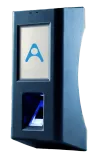

Attendo (formerly Petpooja Payroll) Face Recognition Attendance
Which attendance device suits your floor, what a face scanner does that a card cannot, and when a fingerprint reader is still the better buy.
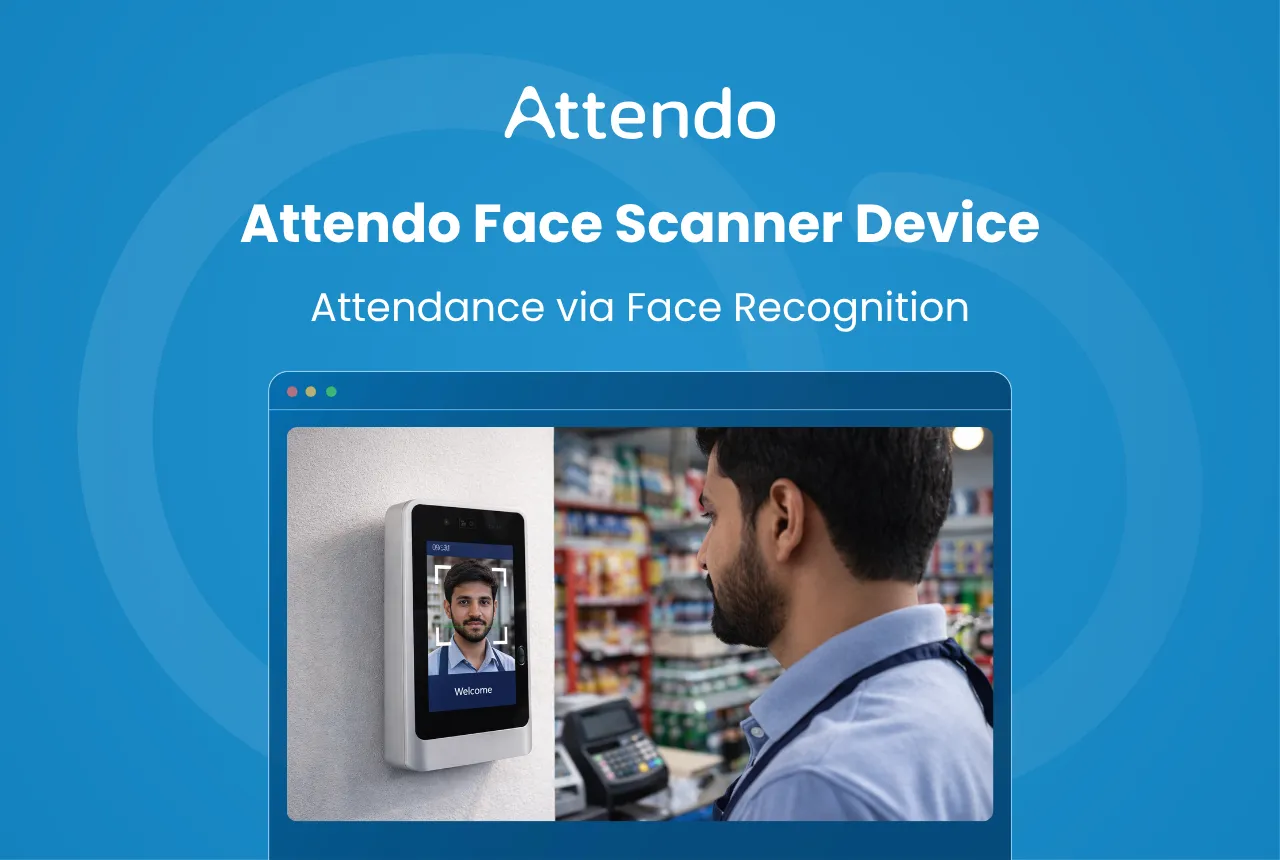
On the working day, attendance never feels like a real problem. Staff turn up on time for the 8 AM rush at the first outlet, shifts get covered, and someone makes a note in a register or an Excel sheet. On the surface, everything looks fine.
The problem shows up on the 1st of the next month, when payroll runs. A few minutes late becomes a deduction. A missed check-in turns into a half-day. Overtime logged by memory doesn’t match what actually happened on the floor. Small gaps in the records turn into pay disputes, and the admin’s WhatsApp group lights up for a week.
This is the gap the Attendo Face Scanner is built to close. It records attendance the moment an employee walks in, blocks proxy attendance, and feeds clean data straight into payroll. No manual corrections, no chasing branch managers, no last-minute Excel cleanup.
Key Takeaways
- The India facial recognition market was valued at USD 418.5 million in 2025 and is forecast to reach USD 903.6 million by 2034 at an 8.66% CAGR (IMARC Group, 2025).
- Attendance that is written down after the fact is the single biggest source of payroll disputes, because nobody can check it later.
- The Attendo Face Scanner registers a punch in 0.03 seconds once it recognises someone, uses AI-based liveness detection to block photo spoofing, and reaches the dashboard in under two seconds.
What is a face scanner attendance system?
A face scanner attendance system uses facial recognition to identify an employee and log their attendance without any physical contact. There is no card to tap, no fingerprint to press, no PIN to remember. The employee walks up, the device recognises them in a second or two, and the entry is in the system.
The difference from older methods is not just speed. It is reliability. Attendance stops depending on whether someone remembered to punch in. It becomes a record tied to physical presence, captured the first time, without the manager having to check anything on the 30th of the month.
For a diagnostic lab chain in Pune or a Sarkhej textile unit with 48 workers running two shifts, that is the difference between trusting the payroll sheet and re-verifying every row before salary credit.
Why does attendance accuracy matter for payroll?
There is no reliable Indian measure of what buddy punching costs, and the businesses losing the money are the least likely to know. What can be shown is the shape of it: even a small share of hours that were never worked, on a payroll of a few lakh a month, adds up to a number worth looking at across a year.
The India biometrics market reflects why this is being taken seriously. It was valued at INR 27,264 crore in 2025 and is projected to reach INR 73,758 crore by 2034 at an 11.69% CAGR (Research and Markets, 2025). That growth is not about security systems. It is about owners getting tired of paying for hours that were never worked.
Most businesses do not move to face scanner attendance because of fraud. They move because of the admin load, and the fraud savings turn up later, quietly.
How does the Attendo Face Scanner work?
Day-to-day, the device slots into the existing routine without adding a new step. An employee walks in, stands in front of the scanner for a moment, and the entry is registered with an exact timestamp. The same thing happens on the way out. Arrival and departure are both captured without anyone having to tap, swipe, or remember anything.
Under the hood, four things are happening in parallel:
- The camera captures the face and the AI engine matches it against stored records for that outlet.
- The device runs an AI liveness check to confirm a real person is standing there, not a printed photo or a phone screen held up by a colleague. A second, infrared camera keeps recognition working in poor light.
- The entry is timestamped and pushed to the Attendo dashboard in real time across every connected branch.
- Over the month, the system builds a full record of working hours, late arrivals, shift durations, and overtime based on what actually happened on the floor.
If you’re still figuring out how attendance feeds into salary processing, our guide on how to calculate payroll for small businesses walks through the CTC-to-net-pay flow that every attendance system sits on top of.
Face scanner vs fingerprint vs card: which one fits your business?
Most businesses upgrading to the Attendo Face Scanner are moving away from either a fingerprint machine or a card-swipe setup. Here’s how the three compare on the things that actually matter for payroll accuracy.
| Feature | Attendo Face Scanner | Fingerprint | Card / RFID |
|---|---|---|---|
| Contact required | No | Yes | Yes |
| Proxy attendance possible | No | Difficult | Yes |
| Works with gloves, bandages or PPE | Yes | No | Yes |
| Speed of check-in | Punch registers in 0.03 seconds once recognised | Punch registers in 0.03 seconds once read | Instant on tap |
| Syncs directly to payroll | Yes | Depends on the system | Depends on the system |
| Liveness detection | Yes (AI-based) | No | No |
| Multi-location dashboard | Yes | Rarely | Rarely |
| Hygiene (post-COVID) | High | Low | Medium |
The fingerprint machine has been the default choice for Indian businesses for over a decade, but it has real operational limits. It needs bare skin, so gloves, bandages and PPE stop it, which is a daily reality in kitchens, cold storage and chemical units. Heavily worn fingerprints can also be slow to read. It also does nothing to prevent a colleague from pressing the print twice on behalf of someone else.
Card systems are even easier to bypass. Swap the card, and the payroll system thinks the other person turned up. Face recognition with liveness detection closes both gaps without adding friction to the check-in. Our detailed comparison of Attendo vs Keka walks through how different systems handle hardware integration for frontline teams.
What are the key features of the Attendo Face Scanner?
The device is built specifically for payroll-linked attendance, not generic office access. Every feature maps to a payroll pain point Indian businesses actually hit.
- Face recognition attendance records entry the moment an employee arrives, with no tapping, scanning, or manual input from anyone.
- AI-based liveness detection confirms a real, live person is in front of the camera. A second, infrared camera handles recognition in poor light. A printed photo, a phone screen, or a video clip will not clear the check.
- Multiple authentication options include NFC cards and passcodes for onboarding week, new joiners still being enrolled, or staff who are temporarily not recognisable after a major change in appearance.
- Real-time data sync pushes every check-in to the dashboard instantly. There is no waiting for the end-of-day sync, no manual upload, no lost entries during a network blip.
- Multi-device sync within a branch means enrolling an employee once at the front door makes them recognisable at every other entry point in that outlet.
- Integrated dashboard and mobile access let managers pull reports from a desktop or phone, and employees can view their own attendance logs without having to ping HR.
- Door access integration lets the same check-in unlock the physical door, so attendance marking and entry happen in one step.
- Flexible connectivity over Wi-Fi or Ethernet keeps installation straightforward in most business environments, including dusty shop floors and hot kitchens.
What changes after switching to face scanner attendance?
The biggest shift is not the hardware. It is what happens on the 30th of the month. A business that moves from punch-in registers to the Attendo Face Scanner usually finds payroll preparation collapses from days to hours, because there is nothing left to reconcile. The data was already clean.
| Dimension | Before the Face Scanner | After the Face Scanner |
|---|---|---|
| How attendance is captured | Manual punch-in, fingerprint, or card swipe | Contactless on arrival and departure |
| Missed entries | Common, corrected by hand later | Rare, presence is recorded directly |
| Proxy attendance risk | Present with cards and buddy-punching | Blocked via AI liveness detection |
| Payroll preparation | Requires verification and corrections | Runs on clean, synced data |
| Multi-location visibility | Manual consolidation from each branch | Live on a single dashboard |
| Staff disputes on pay | Frequent, especially around shift-end times | Much lower, records match the floor |
| Time spent on payroll admin | High | Low |
Which businesses get the most out of the Attendo Face Scanner?
The device pays off fastest in settings where attendance is high-volume and accuracy genuinely drives the payroll number. A handful of wrong entries across a 60-person team is a real financial problem, not a rounding error.
Five setups where it fits most naturally:
- Manufacturing units and warehouses running two or three shifts a day
- Retail chains with high turnover and frequent new joiners
- Hospitality teams, from hotels to cafes, with shift-based service staff
- Multi-location businesses that need one dashboard across every branch
- Any business already losing hours every month to payroll disputes traced to bad attendance data
Attendo supports more than 40,000 businesses, including L&T Realty, Zepto, ISKCON, Mapro and Medilink, where shift-heavy operations and multi-site visibility are the rule, not the exception. For a broader view of the full payroll stack that sits behind the device, see the benefits of Attendo for Indian businesses.
Conclusion
Most businesses already have some kind of attendance system. The real question is whether it is one the payroll team can actually trust on the 1st of the month. If every cycle begins with an Excel cleanup and a round of WhatsApp follow-ups, the system is costing more than it is saving.
The Attendo Face Scanner closes that gap at the source. Attendance is captured the moment it happens, verified against a real face, and ready for payroll without any manual touch. Over a few months, the 30th of the month stops being the stressful day of the calendar and starts feeling like any other.
Frequently Asked Questions
1. What is a face scanner attendance system?
2. How does the Attendo Face Scanner record attendance?
3. Can the Attendo Face Scanner be used across multiple branches?
4. Is face recognition better than fingerprint attendance?
5. Can the face scanner feed directly into payroll?
Related Articles You May Like
Geo Tracking Attendance in Attendo (formerly Petpooja Payroll)
What gets recorded when a field employee is tracked, how the licence is billed, and when plain attendance with a geofence is the better answer.
Avani Joshi
HR & Payroll Experts
Field Sales Attendance: Attendo (formerly Petpooja Payroll)
How field sales attendance actually gets verified, what GPS and a selfie prove together, and where the payroll leak really comes from.
Avani Joshi
HR & Payroll Experts
Attendo (formerly Petpooja Payroll): Attendance to Salary
Attendance, leave, shifts and overtime all land in the same salary figure. Here is the path a punch takes to become a payslip.
Avani Joshi
HR & Payroll Experts
How Half Day Leave Works, and What It Costs
Most guides treat half day leave as a fixed entitlement with fixed rules. It is not one. Here is what the codes actually settle, what your own policy has to, and how much money sits on the difference.
Ashwiniba Vaghela
HR & Payroll Experts