


Why Accrued Leave Is Not the Same as Earned Leave
The phrase earned leave is in the labour code on safety and working conditions. Accrued leave is not. And earned leave belongs to two jobs most of your staff do not hold.
Listen to this article
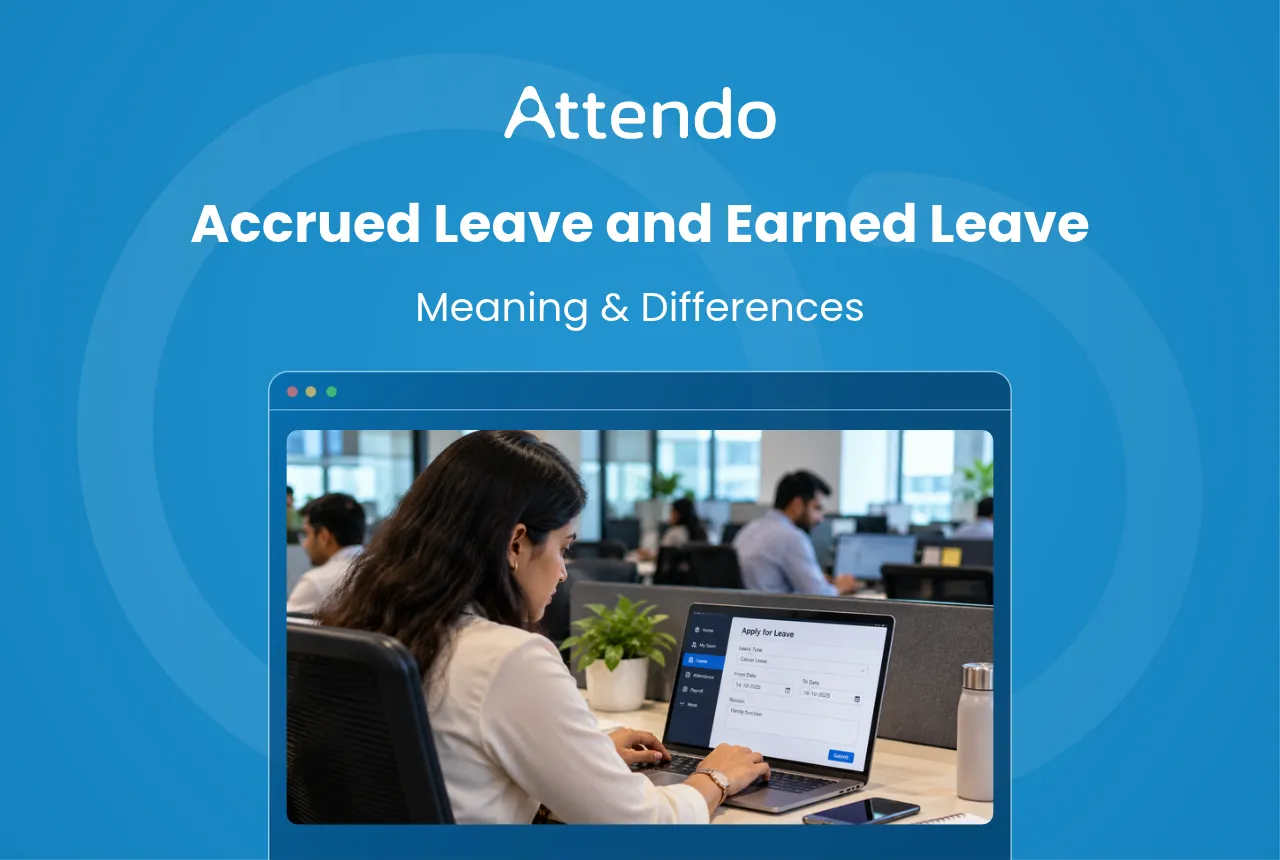
Accrued leave is the leave a person has built up and not yet taken. That is what the phrase means in practice, and it is worth knowing that the phrase is not in the Code.
What surprised me reading the Code is that earned leave is in there as a phrase, seven times over. Six of them are about two specific jobs, and the seventh points straight at those six.
The leave the rest of your staff build up sits in a different section, at a different rate.
This page sets out what the Code gives, at what rate, and what happens to leave that nobody used.
Key Takeaways
- The Code does not use the phrase accrued leave at all, and it grants earned leave to only two kinds of job.
- Leave builds at a day per twenty worked. The 180-day condition decides when it can be taken, not whether it builds.
- Thirty days is the carry-forward cap, except for leave the worker asked for and was refused, which carries with no limit.
- An exit is paid out even if the 180 days was never reached, and the Code sets a deadline for paying it.
What Accrued Leave Means
The entitlement sits in section 32(1) of the Occupational Safety, Health and Working Conditions Code, 2020, the OSH Code for short. It says every worker in an establishment is entitled to leave in a calendar year with wages.
Read that phrase again, because it is the Code’s own name for the thing. Not accrued leave, not earned leave, not privilege leave. The phrase is leave in a calendar year with wages.
The Code also says worker where most businesses say employee, and it defines the word itself. This page follows the Code where the entitlement is being quoted, because the rate attaches to that word.
Section 2 defines an establishment by headcount for most workplaces, and brings in a mine, a port or the vicinity of a port where dock work is carried out whatever the headcount.
Where the Code does not reach, and in a state with its own shops and establishments rules, the entitlement can come from a different instrument with different numbers.
In Simple Words
Accrued leave just means leave a person has built up but not used yet. It is a work word, not a Code word. The Code calls it leave with wages.
That is the entitlement. Who has to track it, and in what, is the other half of the problem.
Attendo (formerly Petpooja Payroll) is a complete workforce management system for every kind of business, running attendance, shifts, leaves, payroll and statutory filings in one place. Attendo has more than 40,000 users today. It is Software By Petpooja, building helpful products for Indian businesses since 2011.
Accrued Leave vs Earned Leave
Here is the part that trips people up. Earned leave is a real term in the OSH Code. It appears seven times. Six of them sit inside section 25(3), and the seventh is in the rule-making powers, pointing straight back at it.
That subsection is about sales promotion employees and working journalists. For them the Code grants earned leave on full wages, if requested for, of not less than one-eleventh of the period spent on duty.
Why the Difference Matters
One-eleventh of duty is a more generous rate than one day per twenty worked. So the phrase your leave register probably uses belongs to a provision that most of your staff are not covered by.
Nothing breaks if an IT services firm in Hyderabad uses the label earned leave in the software. What matters is which rate the balance is built at, and which section you would point to if somebody asked.
The Two Provisions Side by Side
| What differs | Section 32 | Section 25(3) |
|---|---|---|
| Who it covers | Every worker in an establishment | Sales promotion employees and working journalists |
| The rate | One day for every twenty days worked | On request, not less than one-eleventh of the period spent on duty |
| What the Code calls it | Leave in a calendar year with wages | Earned leave |
| Accumulation | Carried forward, capped at thirty days | Up to a limit the Central Government prescribes |
So the question is not which phrase your register uses. It is which section the balance was built under, and at which of the two rates.
How Accrued Leave Builds Up
Two numbers do the work: a gate, and a rate.
The gate is section 32(1)(i): the worker must have worked one hundred and eighty days or more in the calendar year before the leave can be taken. The rate is section 32(1)(ii): one day of leave for every twenty days of work.
Take a textile mill in Coimbatore. Suppose a worker put in 220 days over the calendar year. At one day per twenty, 220/20 gives 11 days of leave with wages for that year. The earned leave calculator works that out from a day count.
Two groups accrue faster. An adolescent worker earns a day for every fifteen, and so does a worker employed below ground in a mine.
What Counts Toward the 180 Days
This is the clause that catches people out. Under section 32(1)(iii), a period of layoff, maternity leave or annual leave already taken counts toward the 180 days.
But the same clause says the worker shall not earn leave for the period so counted. So those days help a person through the gate and build no balance of their own.
One more clause sits here. Under section 32(1)(iv), a holiday falling between the leave days somebody takes is excluded from the leave period, so it is not counted against the balance. The sandwich leave policy guide covers how that plays out in practice.
A mid-year joiner is handled separately. Section 32(1)(v) gives them the same rate for working one-fourth of the days left in the year. So a diagnostic lab chain hiring in October still owes leave for that year.
In Simple Words
Work 180 days in the year and the whole year counts. Then every twenty days you worked gives you one day off. Join late and a smaller count still gets you in.
Accrued Leave You Did Not Take
Section 32(1)(vii) carries unused leave into the next year, and caps what can carry at thirty days.
Then it adds the line almost nobody quotes. A worker who applied for leave with wages and was not given it may carry that refused leave forward without any limit.
The Cap Does Not Apply to Refused Leave
The thirty-day cap is the rule, and refused leave is its carve-out. The difference is whether a request was made. Leave nobody asked for is capped at thirty days. Leave somebody asked for and did not get is not capped at all.
Which makes the approval record the thing worth keeping. A supermarket that declines leave in its busiest fortnight and keeps no trace of the request has no way to show which balance was capped.
Encashment sits beside this. Under section 32(1)(viii) the worker is entitled on demand to encash leave at the end of the calendar year, and under 32(1)(ix) to encash whatever exceeds the thirty days.
Accrued Leave When Someone Leaves
Section 32(1)(vi) covers the exit, and it is more generous than the rest of the section.
Where a worker is discharged, dismissed, quits, retires on superannuation or dies in service, the worker or their heir is entitled to wages in lieu of the leave the worker had built up. That holds even if the 180 days was never worked.
The Code also sets when. A discharge, dismissal or resignation has to be paid before the end of the second working day, and a retirement or death within two months.
Two working days is a short clock, and it applies to the leave component specifically rather than to the whole settlement.
What that pay is calculated on comes from the Code’s own definition of wages at section 2, which is the same wording the Code on Wages, 2019 uses.
Where Attendo Fits
Leave accrual is a configuration problem long before it is a dispute. The rate and the gate have to be set once and then left alone. Otherwise two employees who worked the same year end up with different balances.
Attendo ships six leave types, Paid, Unpaid, Earned, Sick, Casual and Comp-Off, plus any custom type a business needs. Each type carries its own balance, accrual rule and approval flow.
Encashment runs monthly or yearly, on a default formula or one you build in an Excel-like field.
One deliberate thing worth knowing: the leave module is not switched on by default. It sits behind a guided setup, because leave is the most opinionated part of a payroll configuration and no sensible default exists for every business.
If you would rather set the accrual rule once than recompute balances every December, attendohr.com is where to look at it.
Your Accrued Leave Checklist
Most leave disputes I have seen are not about the rate. They are about a balance nobody could explain, in a register that changed definition somewhere along the way.
My Opinion
I would write the rate and the gate into the leave policy in one line each, in the Code’s own words. A policy that says what the register does is the cheapest thing you can keep.
Six Things to Check This Quarter
- Write down the accrual rate your register uses, and the section it comes from.
- Check whether your state’s shops and establishments rules set something different from the Code’s floor.
- Confirm that layoff and maternity days count toward the 180 but earn no balance of their own.
- Keep the approval trail for refused leave, because that balance is not capped at thirty days.
- Set the mid-year joiner rule, so somebody hired in October is not silently given nothing.
- Put the exit payout on a two-working-day clock for the leave component.
The policy document is where all of this has to land. How to prepare a leave policy format covers the structure, and sick leave in India covers the type people confuse this one with.
All of this has been in force since the four labour codes took effect on 21 November 2025.
If you want accrued leave worked out from one rule you set once, how Attendo works is the short version, and attendohr.com is the place to start.
Frequently Asked Questions
1. What does accrued leave mean?
2. Is accrued leave the same as earned leave?
3. How many days of leave does a worker accrue in a year?
4. How much accrued leave can be carried forward?
5. Is accrued leave paid out when someone resigns?
6. Can an employer refuse leave and let it lapse?
Listen to this article
Related Articles You May Like
6 Employee Background Verification Checks Before You Hire
Hiring someone, or being checked yourself? Here are the six background verification checks, what each one proves, and the data rules that apply from May 2027.
Ashwiniba Vaghela
HR & Payroll Experts

Relieving Letter vs Experience Letter: Definition and Difference
What each document is, and why only the experience letter can be demanded, and only from a larger employer. A relieving letter rests on company practice alone.
Ashwiniba Vaghela
HR & Payroll Experts
Top 5 Warning Letter to Employee Formats in Different Tones
Five warning letter formats, one per tone, ready to adapt, plus the path from warning to show cause to termination.
Avani Joshi
HR & Payroll Experts
Notice Period Rules in India and What Actually Applies
Three instruments set the notice period rules in India, and only two of them are the Code. The third is the letter you wrote when the person joined.
Avani Joshi
HR & Payroll Experts