


Sabbatical Leave Means Months Off With Your Job Kept for You
Want months off work without losing your job? In India, sabbatical leave rests on your employer’s policy, except for senior university teachers, who have their own rule.
Listen to this article
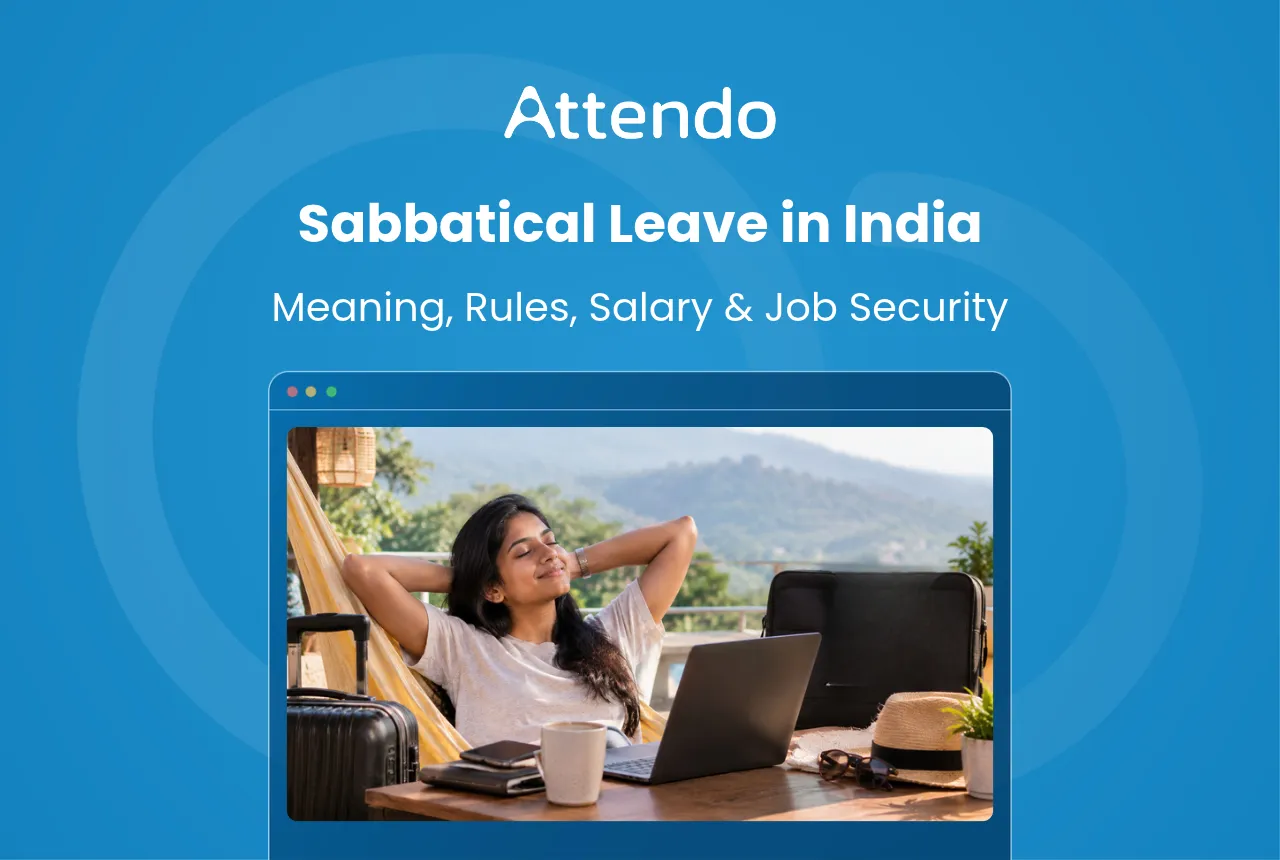
You want three or six months off work to study, rest or look after family. You also want your job back when you return. Can you take that break, and will you be paid?
That break is called sabbatical leave. In India, no central law gives most private employees a right to it. Your company’s policy decides who gets one and what it pays.
I expected to find sabbatical leave in India’s labour laws. It is not in the central leave rules or the four labour codes. The one rulebook I found that uses the word is the University Grants Commission’s (UGC), for university teachers.
Key Takeaways
- Sabbatical leave is a long, planned break with your job held. In most private jobs, your employer decides whether you get one and whether it is paid.
- Unpaid sabbatical days cut your salary. Each day away comes off your pay, the same way as leave without pay.
- Senior university teachers have the clearest rule. They can be granted up to two years in a career on full pay.
- Central government staff should ask for study leave. It is paid, mainly for job-linked study, and capped at 24 months in a career for most staff.
What Is Sabbatical Leave?
Sabbatical leave is time off work for months, often up to a year, that an employee agrees with the employer in advance. The job is kept, and the employee returns to it when the break ends.
People take one to study, look after a parent or child, recover from burnout, travel or work on something of their own.
A company can tie it to years of service, the way the UGC rule asks for seven years as a senior teacher. That makes it a reward for staying, not something every new joiner can ask for.
In Simple Words
It is a long break from work. You plan it with your boss first. Your job waits for you until you come back.
Is Sabbatical Leave Paid in India?
It depends on who you work for. For most private employees, the company policy decides, and a sabbatical may come with full pay, part pay or none.
University and college teachers covered by the UGC Regulations, 2018 have a written answer. A university can grant sabbatical leave on full pay and allowances to a permanent teacher who has served seven years as an Associate Professor or Professor.
It can last up to one year at a time and two years in a whole career. A teacher back from study leave, or from training of a year or more, must wait five years before a sabbatical.
During the leave, the teacher cannot take a regular job elsewhere. If the teacher takes a paid fellowship instead, the university may cut the pay.
Pay during a sabbatical is still pay for your job, so it counts as wages under the labour codes. Provident fund (PF), Employees’ State Insurance (ESI) where it applies, and tax on salary carry on as usual.
An unpaid sabbatical has no wages, so there is nothing to take PF or tax from.
Sabbatical Leave vs Unpaid Leave
Both can mean no salary, but they are not the same thing. Unpaid leave, often called leave without pay (LWP), covers days or weeks when paid leave has run out. A sabbatical is planned months ahead and runs much longer.
| Sabbatical leave | Unpaid leave (LWP) | |
|---|---|---|
| Length | Months, often up to a year | Days or weeks |
| Planned | Months in advance | Often at short notice |
| Who can ask | Staff who meet the policy’s service rule | Anyone whose paid leave has run out |
| Pay | Paid, part-paid or unpaid, by policy | Unpaid |
| Return terms | A set return date, sometimes a promise to stay on | None beyond the leave dates |
In payroll, an unpaid sabbatical works the same way as LWP: each unpaid day comes off the month’s salary. The leave without pay guide shows how one day’s cost is worked out.
Attendo (formerly Petpooja Payroll) is a complete workforce management system for every kind of business, running attendance, shifts, leaves, payroll and statutory filings in one place. Attendo has more than 40,000 users today. It is Software By Petpooja, building helpful products for Indian businesses since 2011.
How to Apply for Sabbatical Leave
Start with your company’s leave policy or HR handbook. It should say who qualifies, how long you can take, what is paid and how much notice to give. Then follow these steps:
- Check the policy. Look for a sabbatical, career break or long leave section. If there is none, ask HR whether one can be agreed.
- Ask early. Give your manager months of notice, so your work can be covered.
- Write a short application. Give the reason, the dates and how your work will be handed over.
- Get the terms in writing. Pay, return date, and what happens to your leave balance, PF and benefits.
- Agree how you will return. Your role on return, and anything you promise in exchange, such as staying on for a set time.
Sample Sabbatical Leave Application
Here is a short sample you can change to fit your own case.
Subject: Application for sabbatical leave
Dear [Manager’s name],
I would like to apply for sabbatical leave from [start date] to [end date] to [reason, for example, complete a postgraduate course].
Before I leave, I will hand over [my work] to [colleague] and share notes on open tasks. I plan to rejoin on [date] in my current role.
Please let me know the terms of the leave, including pay and benefits, so I can plan for it.
Regards, [Your name], [Employee ID]
If you decide during the break not to come back, resign in the usual way. The notice period rules explain how much notice you still owe.
Sabbatical Leave in Central Government
Central government staff take study leave, which is paid, or extraordinary leave, which is not. Their leave rules never use the word sabbatical.
Study Leave
Under the Central Civil Services (CCS) (Leave) Rules, 1972, study leave can be granted after five years of regular service, mainly for study linked to the employee’s work.
It is ordinarily up to 12 months at a time and 24 months in a whole career, with 36 months for some doctors in the Central Health Service. The employee signs a bond to serve at least three more years after coming back.
It is paid: the salary drawn before the leave, plus dearness allowance and house rent allowance. Any scholarship, stipend or part-time earnings are taken off, though the rules set a floor the pay cannot drop below.
Did You Know?
On 8 September 2026, the Department of Personnel and Training made clear that a scholarship or stipend earned on study leave is cut from the leave pay for study in India too, not only abroad, as UNI reported.
Extraordinary Leave
Extraordinary leave is the unpaid kind. In special circumstances, it can be granted when no other leave is due, or when other leave is due but the employee asks for this one in writing. Staff who are not yet permanent face shorter limits.
No central government employee can be granted leave of any kind for more than five years at a stretch. An absence beyond that is usually treated as a resignation, after the employee is given a chance to explain.
State government staff follow their own state’s leave rules, so they should check those instead.
Sabbatical Leave Policy for Employers
For most private employers no law sets the terms, so the policy has to. Settle these five points before anyone applies:
- Who qualifies. Years of service, role and any performance bar.
- How long. A minimum and a maximum, and how often it can be taken.
- Pay. Full, part or none, and whether bonus and increments continue.
- Benefits. Whether health cover continues and whether the time earns leave.
- Return terms. The return date, the role and any promise to stay on.
Point 4 needs care.
Under the Occupational Safety, Health and Working Conditions Code (OSH Code), a worker gets annual leave after working 180 days in a calendar year.
Days of layoff (when the employer has no work to give), maternity leave and annual leave taken count towards those 180 days, though those days earn no leave themselves.
A sabbatical is not on that list, so the Code does not count its days towards the 180. Your policy can still count them.
“Worker” is the Code’s word. It leaves out managers, and it also leaves out supervisors earning over ₹18,000 a month. For them, your policy decides.
The accrued leave guide explains how a leave balance builds up.
Gratuity works differently. Under the Code on Social Security, 2020, time away on approved leave does not break continuous service. So the years before and after a sabbatical count as one unbroken stretch for gratuity.
Pro Tip
I’d suggest putting the return date, the role and any promise to stay on into the sabbatical letter. Even study leave in government comes with a promise to serve three years, so asking your employee to promise a shorter stay is fair.
A sabbatical policy suits an IT services firm keeping senior engineers, a healthcare chain giving doctors time for a fellowship, a manufacturing firm sending a plant engineer for a degree, or a school letting a teacher finish a teaching degree.
The leave policy format shows where a section like this fits in your wider leave policy. For a long leave set out in full, see the maternity leave policy template.
Where Attendo Fits
A sabbatical kept on a spreadsheet can turn into a payroll mistake, with an unpaid month paid or a paid month cut.
Attendo lets you add your own leave types, so a sabbatical can sit as its own type with its own balance and accrual rules.
Requests can go through a multi-level approval chain, such as the reporting manager, then the department head, then HR.
If you want long leaves tracked like any other leave type, attendohr.com shows how it works.
So, How Does Sabbatical Leave Work?
Sabbatical leave is months off work that your employer agrees to. Your job is held until you return. In most private jobs, the company policy decides if it is paid.
Senior university teachers have their own sabbatical rule. Central government staff can take study leave instead. Whatever your job, get the dates, the pay and the return terms in writing.
To set up sabbaticals as their own leave type, see how Attendo handles it.
Frequently Asked Questions
1. Is sabbatical leave paid in India?
2. Who is eligible for sabbatical leave?
3. How long can sabbatical leave be?
4. Can my company refuse sabbatical leave?
5. Do I get PF and earn leave during a sabbatical?
6. Can I work somewhere else during a sabbatical?
Listen to this article
Related Articles You May Like
7 Leave Application for Office Formats You Can Copy and Send
Need a day or a month off? Copy one of these 7 leave application for office formats, from sick leave to maternity, and send a request HR can approve.
Avani Joshi
HR & Payroll Experts
How Much Paternity Leave Do Fathers Actually Get in India?
Central government service gives a father 15 paid days. Private employers decide through their own policy, because the four labour codes are silent on paternity leave.
Ashwiniba Vaghela
HR & Payroll Experts
How Many Festival Holidays Must You Give in Your State?
Seven paid days a year in one state, thirteen in another. Here is what nine states and Delhi put in writing, and how to find the rule for anywhere else.
Avani Joshi
HR & Payroll Experts
Is a Diwali Holiday Paid? Not Always, and No Law Fixes It
No law passed by Parliament turns Diwali into a paid day off. The duty sits with your state, and with whatever holiday list you published yourself.
Ashwiniba Vaghela
HR & Payroll Experts