


How Much Paternity Leave Do Fathers Actually Get in India?
Central government service gives a father 15 paid days. Private employers decide through their own policy, because the four labour codes are silent on paternity leave.
Listen to this article
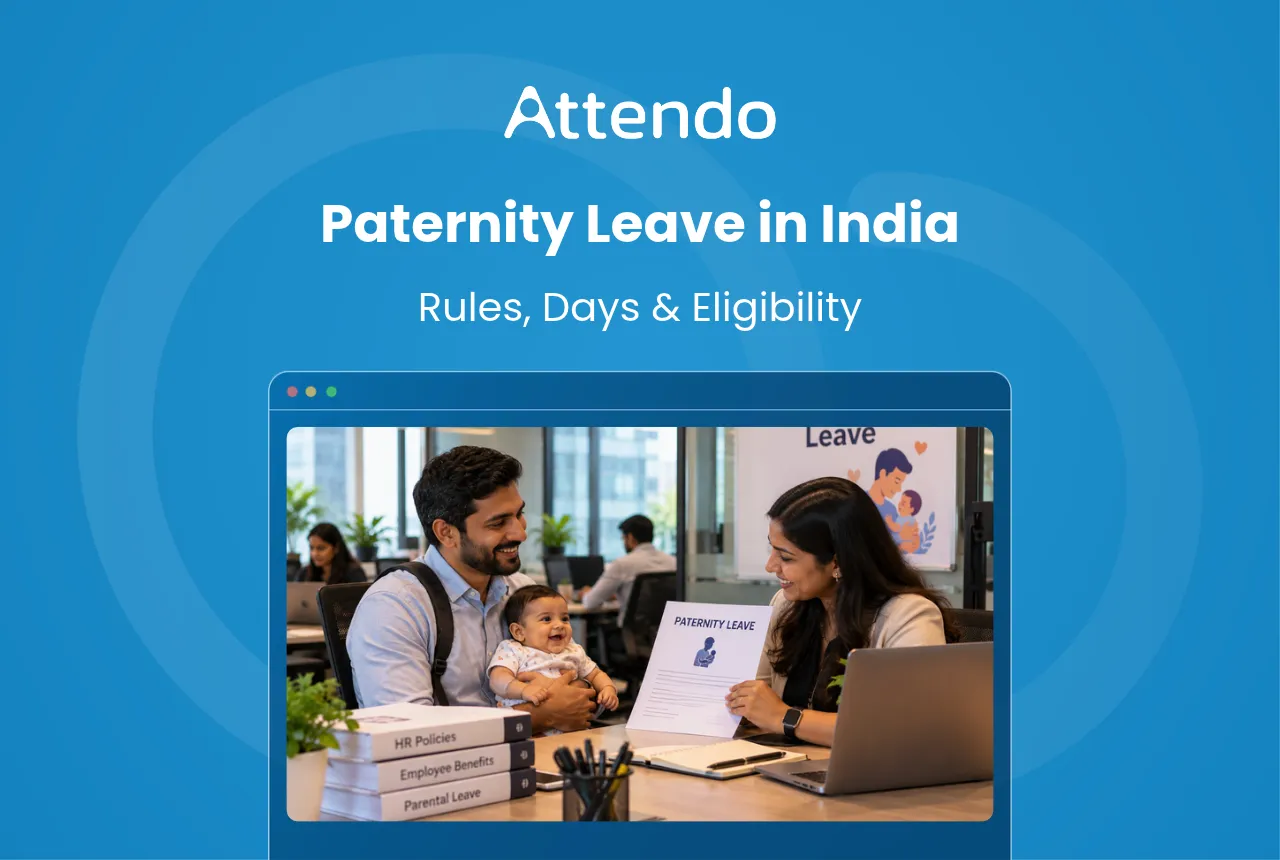
A baby is on the way, and one question comes up early: how much paternity leave will the father get?
In most private jobs, the company’s leave policy decides. India’s labour codes set no number of days. In central government, a dad with one child or none gets 15 days on full pay.
That gap in the codes surprised me. The Code on Social Security names maternity 60 times. It never names paternity, and nor do the other three codes.
Key Takeaways
- Most fathers get what their company’s policy gives. No labour code sets a number of days for private jobs.
- Central government fathers get 15 paid days. The leave is for a dad with no more than one surviving child.
- The 15 days have a time limit. Unused days lapse after six months.
- Adoption and surrogacy count too. Central rules give 15 days for each, with the same two-child limit.
Paternity Leave by Type of Employer
It depends on who you work for. The central government figures come from the Central Civil Services (CCS) (Leave) Rules, 1972, and the table shows each case.
| Who you work for | Paternity leave | Set by |
|---|---|---|
| A private company | Whatever the leave policy says | Your employer, not a law |
| Central government | 15 days on full pay | CCS (Leave) Rules, rule 43-A |
| Central government, child by surrogacy | 15 days within six months of the birth | Rule 43-A(6), added in 2024 |
| Central government, adopting a child under one | 15 days within six months of taking the child in | Rule 43-AA |
| A state government | Set by that state’s leave rules | Your state’s service rules |
The gap between parents is wide, as the chart below shows.
So for most fathers in India, the real answer sits in the employer’s leave policy and the job contract.
In Simple Words
In a private job, your firm sets the days. A dad in central government gets 15 days if he has one child or none.
Paternity Leave in the Private Sector
The labour codes set no minimum. India’s four labour codes, in force since 21 November 2025, set out leave, wages and working conditions, and none of them mentions paternity.
The official text of each one says nothing about it: the Industrial Relations Code, the Occupational Safety, Health and Working Conditions (OSH) Code, the Code on Wages and the Code on Social Security.
Maternity, by contrast, has a full chapter in the Code on Social Security. The government’s own factsheet on the codes lists up to 26 weeks of maternity leave.
So in a private job, three things decide your paternity leave:
- Your company’s leave policy.
- Your offer letter or employment contract.
- Any written agreement between your union and the employer.
If all three are silent, you can still use earned or casual leave for the birth, if you have a balance.
Ask HR for the leave policy in writing before the due date. If paternity leave is in it, note the number of days and the window to use them.
Once the policy names the days, someone has to make sure payroll pays them.
Attendo (formerly Petpooja Payroll) is a complete workforce management system for every kind of business, running attendance, shifts, leaves, payroll and statutory filings in one place. Attendo has more than 40,000 users today. It is Software By Petpooja, building helpful products for Indian businesses since 2011.
Who Gets Paternity Leave in Government?
A central government employee with fewer than two surviving children gets 15 days of paternity leave under rule 43-A of the CCS (Leave) Rules. The rule covers apprentices too.
Who Qualifies and When
- Fewer than two surviving children. A father with two or more can use any other leave he has.
- A fixed window. It can start up to 15 days before the delivery and must be taken within six months after it.
- Full pay. He is paid the salary he drew just before the leave.
- Not taken from his leave balance. It does not come out of his other leave, and it can be joined to any kind of leave.
If it is not used inside the window, it lapses. The rules also say it should not normally be refused.
Adoption and Surrogacy
A separate rule gives the same 15 days to a father with fewer than two surviving children who adopts a child below one year, or takes one into pre-adoption foster care. He must use the days within six months of taking the child in.
If foster care does not end in adoption, those days come out of his other leave.
Since June 2024, the intended father of a child born through surrogacy can get 15 days within six months of the birth, if he has fewer than two surviving children.
The rules call him the commissioning father, and the amendment notified by the Department of Personnel and Training added him to the paternity leave rule.
What Changed Recently
On 18 June 2024, surrogacy entered the central rules: 15 days for the intended father and 180 days for the intended mother, each with fewer than two surviving children.
Single Fathers and State Employees
A single father in central government service, meaning unmarried, widowed or divorced, can also take child care leave, a separate leave for looking after a child, under its own conditions.
State government employees follow their own state’s leave rules. Check your state’s service rules or ask your office for the current figure.
Is Paternity Leave Paid?
In central government service, yes, in full for all 15 days, as set out above.
In a private job, it is paid only if the leave policy or contract says so. If the policy gives no paternity leave, you can use any earned or casual leave you have left, and those days stay paid.
Once those run out, the extra days are usually unpaid, and leave without pay shows how one day’s pay is worked out. Check your earned leave balance before the due date, so you know how many paid days you have.
Paternity Leave Policy for HR and Owners
Because the labour codes are silent, the policy is yours to prepare. A clear policy saves arguments when a baby arrives early.
Settle these six points before you publish it:
- How many days. Pick a number and put it in writing.
- Who qualifies. Decide whether new joiners need a minimum period of service first.
- The window. Say how soon after the birth the days must be used.
- Adoption and surrogacy. Say whether they count the same as a birth.
- Pay. State that the days are paid in full, if they are.
- A separate leave type. Keep it apart from earned leave, so a new father does not lose his annual leave.
Pro Tip
I would copy the central government’s design: 15 days on full pay, used within six months, never taken from earned leave. It is simple to run and easy to explain to every employee.
The same policy has to work in every part of the business. A machine operator at a manufacturing plant, a nurse at a hospital chain, a store manager at a retail chain and a developer at an IT services firm should all read it the same way.
Add the paternity leave rule to your leave policy, next to the maternity rules, so both parents read one document.
Where Attendo Fits
Paternity leave only works if payroll knows about it. Otherwise the days can come through as unpaid absence.
Attendo comes with standard leave types and lets you add your own, so paternity leave can sit as its own type. Each type has its own balance, accrual rules and approval flow.
Leave requests can go through a chain of approvals, such as the reporting manager, then the department head, then HR.
Because the leave type is separate, it does not reduce earned leave. If you want leave types like this kept apart from the start, attendo shows how it works.
So, How Much Paternity Leave Is Due?
In a private job, your employer’s policy decides. In central government, a father gets 15 days on full pay. He uses them within six months of the birth, and he must have fewer than two surviving children.
If a baby is on the way, read your leave policy now and plan the days with HR. If you run a business, add a paternity leave rule to your policy before anyone asks.
To track every leave type in one place, see how Attendo handles it.
Frequently Asked Questions
1. Is paternity leave mandatory in India?
2. Can my employer refuse paternity leave?
3. Can I take paternity leave for my third child?
4. Can I start paternity leave before the baby is born?
5. What if my company has no paternity leave policy?
6. Does paternity leave reduce my earned leave?
Listen to this article
Related Articles You May Like
7 Leave Application for Office Formats You Can Copy and Send
Need a day or a month off? Copy one of these 7 leave application for office formats, from sick leave to maternity, and send a request HR can approve.
Avani Joshi
HR & Payroll Experts
How Many Festival Holidays Must You Give in Your State?
Seven paid days a year in one state, thirteen in another. Here is what nine states and Delhi put in writing, and how to find the rule for anywhere else.
Avani Joshi
HR & Payroll Experts

Is a Diwali Holiday Paid? Not Always, and No Law Fixes It
No law passed by Parliament turns Diwali into a paid day off. The duty sits with your state, and with whatever holiday list you published yourself.
Ashwiniba Vaghela
HR & Payroll Experts
Why Dearness Allowance Keeps Rising and Who Actually Gets It
Does dearness allowance reach private pay as well? See the current central DA rate, how it is set, VDA in minimum wages, and how DA is taxed.
Avani Joshi
HR & Payroll Experts